
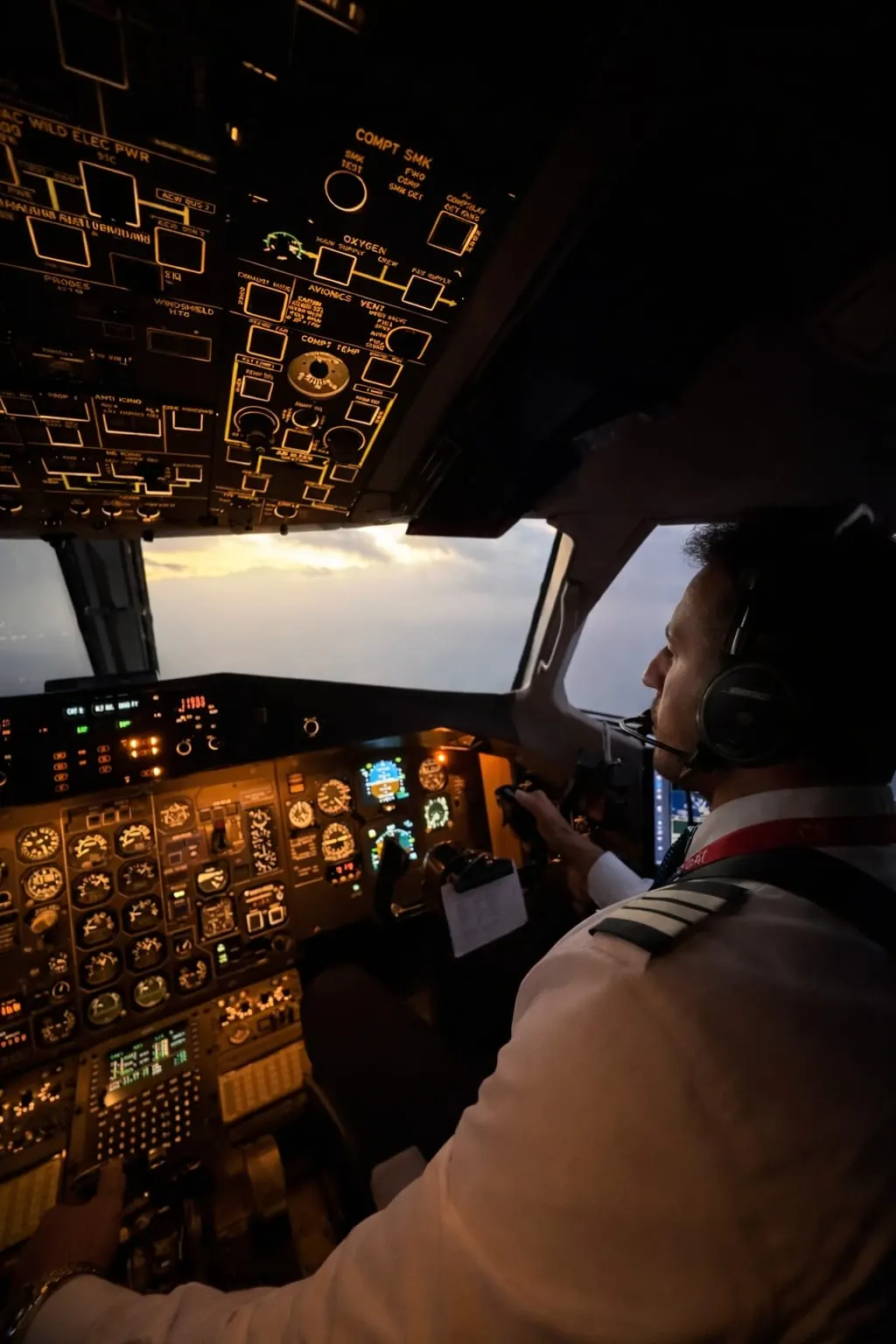
A simulator check compresses everything pilots find stressful into four hours: observation, failures on top of failures, and career weight attached to the outcome. Feeling pressure before one is normal. Letting the pressure fly the sim is optional.
Why the sim feels heavier than the line
On the line, problems arrive one at a time and mostly stay hypothetical. In the sim, they are scheduled, stacked and observed. Your brain knows the difference, and it raises activation accordingly. Some activation is useful, since a fully relaxed pilot scans poorly. The aim is a level where your hands are steady and your training is reachable.
Two weeks out
- Write a short preparation plan instead of an anxious mental loop: which flows, which memory items, which failures, which briefings, spread across the days you actually have.
- Chair-fly the profiles. Sit, close your eyes, and fly the departure, the failure, the approach, with callouts spoken quietly out loud. Mental rehearsal is standard practice in performance psychology because the brain treats vivid rehearsal as experience.
- Rehearse the briefings you will give. A confident, structured brief sets the tone for the whole session, and it is the one part you fully control.
- Close your gap list. One honest page of weak items, worked through, beats rereading the whole manual.
The night before and the morning
Protect sleep like a duty limit. Stop studying early in the evening, since last-minute cramming trades a small amount of knowledge for a large amount of arousal. In the morning, keep the routine you know: normal food, normal coffee logic, early arrival. Use a slow breathing pattern with a longer exhale while you wait. It is a physiological lever, not a trick.
Inside the sim
- Fly what is in front of you. When attention drifts to the examiner or to the last mistake, notice it and return to the next action. That return is the core mental skill of checking.
- Verbalise your picture. It keeps your own mind organised and shows the assessor a working thought process.
- Use your crew. Asking for support at the right moment is a demonstrated competency, not a confession.
- After an error, drop it. One error handled well often scores better than a clean run flown scared.
Afterwards
Debrief in two columns: what happened, and what you will do differently. Verdicts about yourself belong in neither column. If checks keep costing you weeks of sleep, that pattern is workable, and it responds well to structured performance coaching with someone who knows exactly what a sim slot feels like.